A realm built on stolen fire.
Dragons came seeking refuge. The Clergy answered with chains. Now the Blight is spreading again, and the truths buried beneath sacred law are beginning to surface.
Faith is power in their hands.
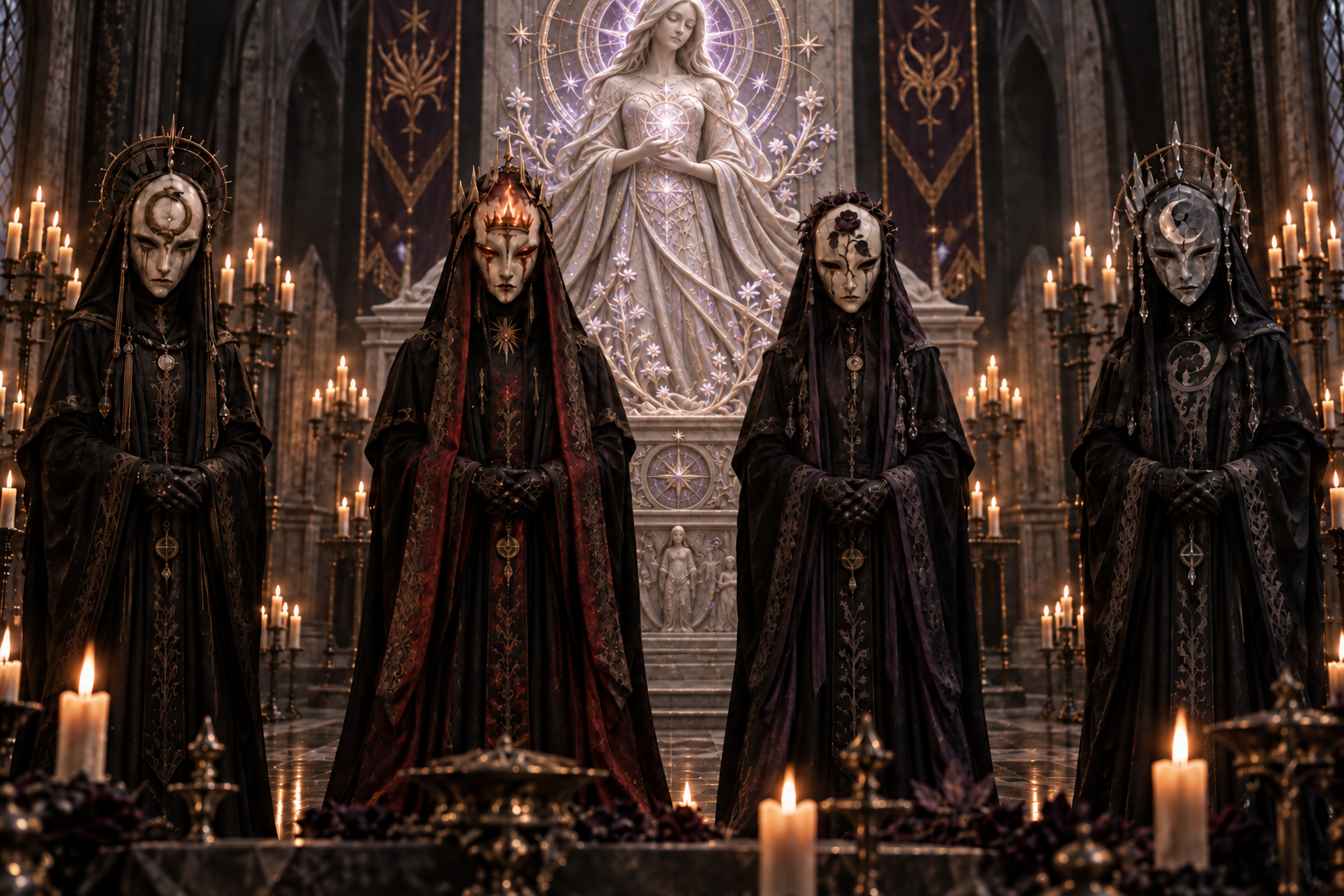
The Clergy are the religious and political authority of the High Fae. They rule from an ancient tree — a living court of bark and deep-sunk roots, older than anyone will admit.
Formal, calculating, and deeply protective of their power, they speak through sacred law, prophecy, and tradition. They use faith to influence the realm and justify their decisions, and fear anything they cannot explain or control.
The Clergy deal in half-truths. Everything Emeriun is told is technically true, and almost none of it is the whole thing. Every kindness arrives with a thread attached to it.
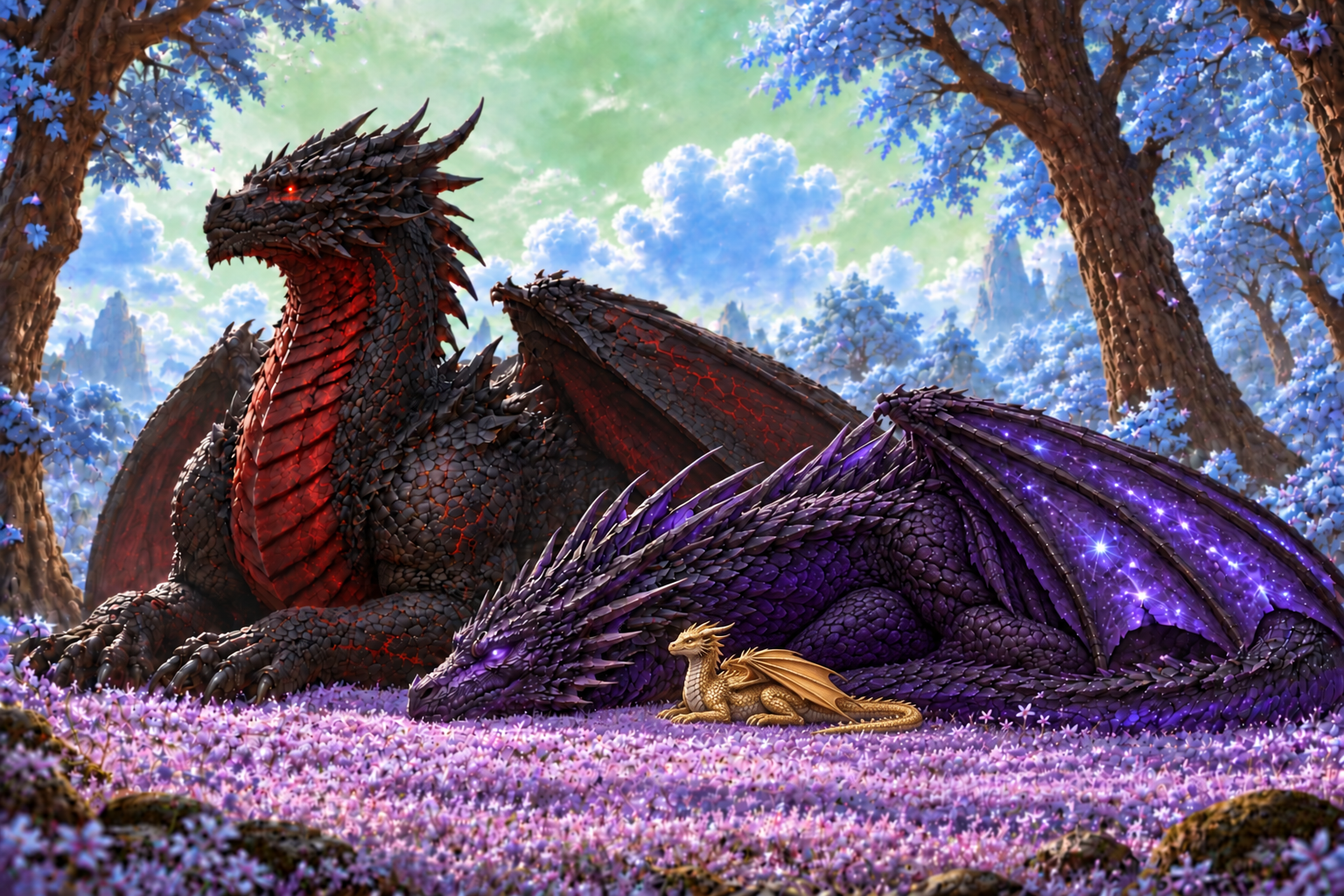
Dragons remember their mothers. They remember the lands they lost. They remember the moment they were forced to kneel.
Dragons were never ordinary creatures.
They came from a realm beyond the veil, fleeing a deadly sickness known as the Blight. The disease spread through their lands, corrupting the soil, poisoning the blood, and turning breath into rot. When the dragons could no longer contain it, their god tore open the veil between worlds and led his people to safety.
But the Clergy did not see refugees. They saw a threat.
Believing the dragons had brought the Blight with them, the Clergy turned against them. After a century of war, the surviving dragons were chained, imprisoned, and forced into servitude. Their history was rewritten until people were taught that dragons had no families, no emotions, and no right to freedom.
But the truth survived.
One soul. One memory. One fire.
Chise is more than a dragon living inside Emeriun's mind. She is the part of Emeriun that remembers what she truly is.
She is one soul with Emeriun, connected to her through blood, magic, memory, and creation. Chise carries the wisdom of an ancient dragon goddess, but she also carries the grief of everything dragons have endured.
She is protective, sharp-witted, and patient when Emeriun needs guidance. She reminds Emeriun that power is not only meant to destroy. Sometimes power means protecting the frightened, grieving, and forgotten.
The child who remembered.
Kaelen was only a baby when the Clergy took him.
He had been playing in the grass and chasing glowing insects when the hunters found him. His mother tried to save him, but they hurt her and carried Kaelen away. Then they lied, claiming dragons were bred in captivity and had no mothers.
Kaelen remembered the truth.
He remembered warmth. He remembered a voice singing to him. He remembered his mother calling him her light.
Even after everything done to him, Kaelen still carried the love she gave him. His story is proof that the Clergy did not create obedient servants. They stole children from their families and called it mercy.
Kaelen is not a monster, a weapon, or a slave. He is a child who survived.
Dragons were never born to serve.
They were not empty creatures without families. They were not the source of the Blight. They were a people fleeing destruction, carrying their own grief and history with them.
The greatest danger was never the dragons.
It was what fear allowed people to do to them.
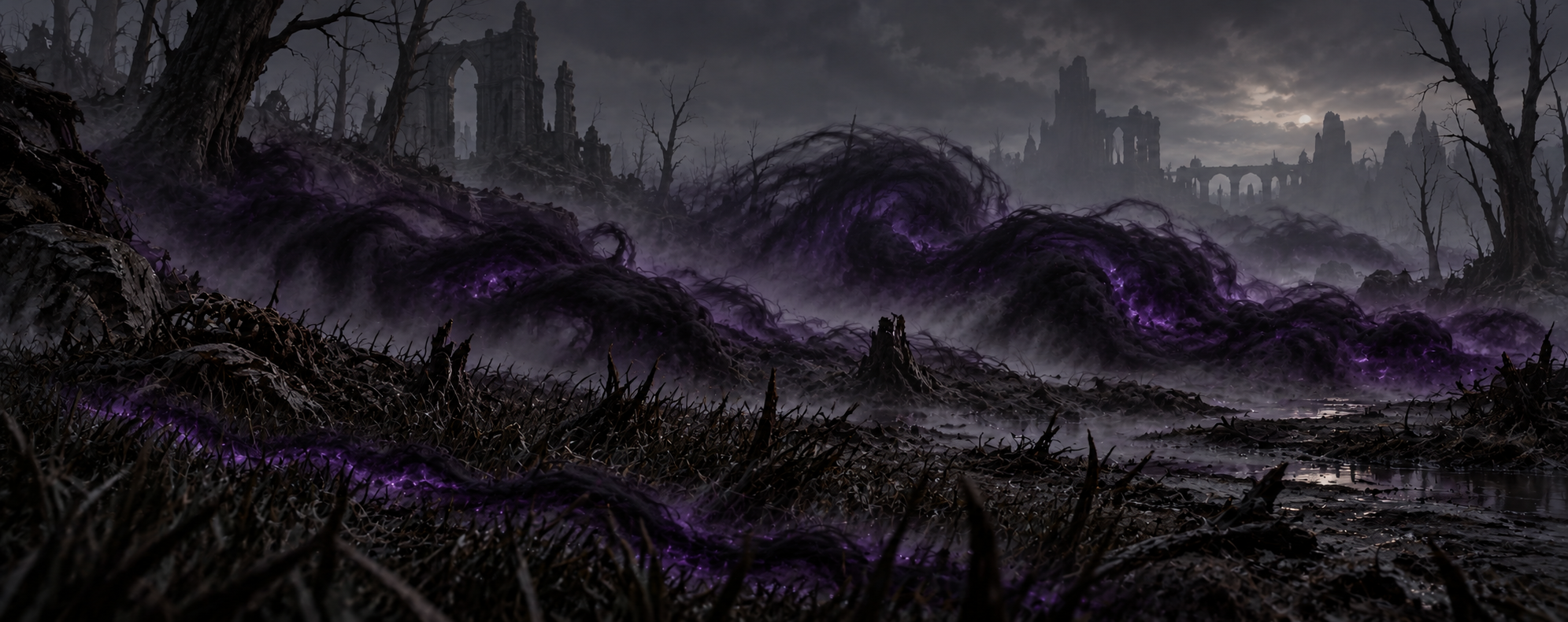
A living corruption that destroys everything it touches.
It first ravaged the dragons' realm before spreading into another world. It sickens the land, twists magic, and leaves death in its wake. Wherever it passes, the world becomes quieter, colder, and less alive.
The Clergy fear the Blight, but fear does not make them innocent. Their attempt to control the dragons only deepened the wounds between the realms.
The Blight is not simply a sickness. It is a force with a history, a purpose, and secrets buried beneath generations of lies.
And now, it is spreading again.
Buried beneath the silence of the fae realm.
Few have heard the complete words. Fewer still are willing to speak of them. The Clergy keep its meaning hidden, guarding every fragment as though the prophecy itself could awaken something dangerous.
Some believe it foretells salvation. Others believe it promises destruction.
Emeriun does not even know her name is part of it.
But the people who do know are watching her closely.
The words readers keep asking about — explained without giving anything away.
Veilfire
The name the fae use for what Emeriun carries. Magic reacts to her — in objects, in the air, in people who would far rather it didn't. What it is, and what it will cost her, is something only the book tells you.
The Clergy
The religious and political authority of the High Fae. Formal, calculating, and deeply protective of their power, they use sacred law, prophecy, tradition, and faith to shape the realm.
A blood oath
The oldest bond there is, and not one offered lightly. Diar carries one toward Emeriun, and he would burn the world before he let her fall. What that oath demanded of him long before she arrived is its own quiet story.
Rune chains
Chains carved with runes that smother a dragon's magic and keep an ancient creature from breaking free. Decades in one will wear down a mind as surely as it wears down a body.
The dreams
Emeriun sleeps, and someone meets her there. It is not imagination, it is not safe, and it is not going away. Every visit pulls her somewhere she never agreed to go.
The prophecy
A prophecy buried beneath the silence of the fae realm. The Clergy guard every fragment, and Emeriun does not even know her name is part of it.
The fastest way in is the first chapter.
Read it free, right here — no sign-up, no email.